Portable power for storm outages: from power banks to power stations
Affiliate disclosure: As an Amazon Associate I earn from qualifying purchases. Purchases made through links on this page may earn a commission at no additional cost to you. Full disclosure here.
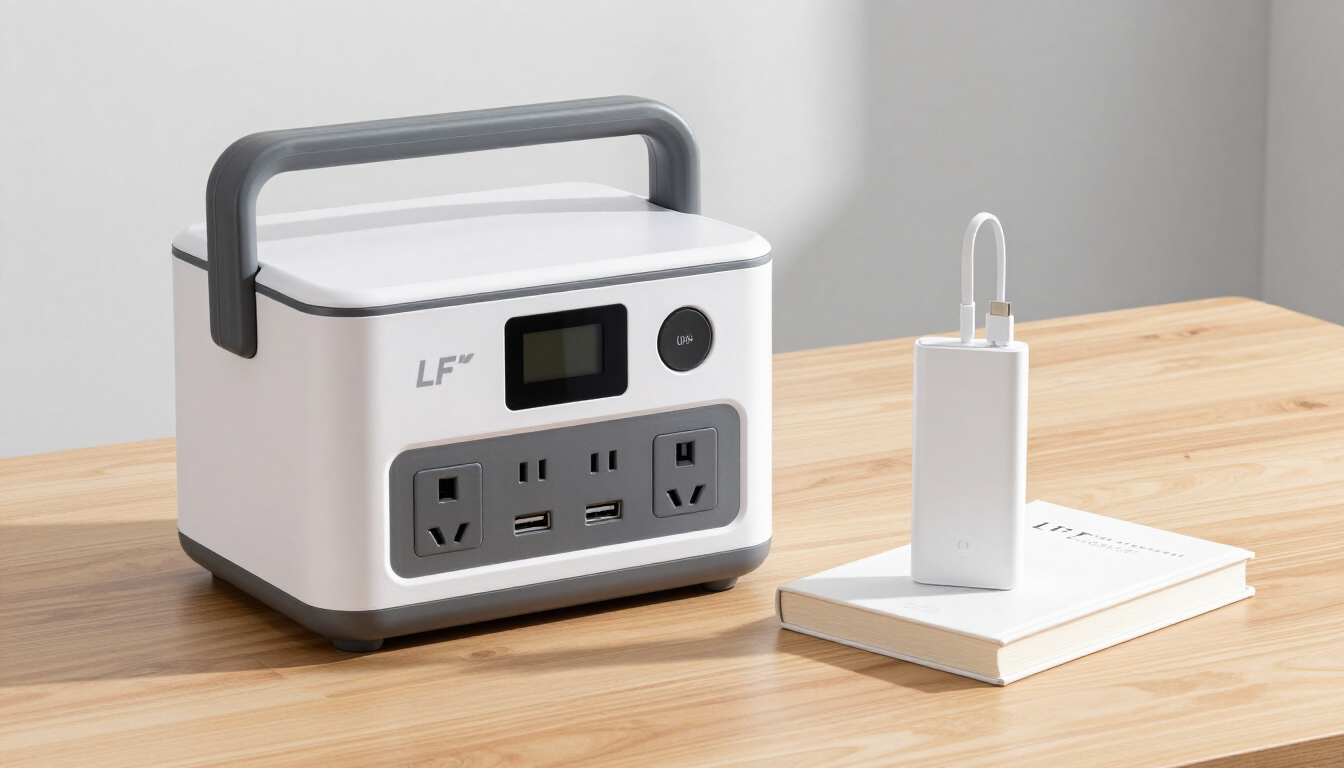
The power goes out in a storm, and the first hour is fine. By the third hour the phones are getting low, the laptop is on its last quarter, and it is starting to look like this one will run into the night. That is the situation a portable power station is bought for, and it is the situation we have used one in, two or three times a year, over a number of years of owning this kind of gear.
This guide covers eleven picks that suit that job, from a power bank that fits in a coat pocket to a power station the size of a small cooler. They are grouped by size, because size is the decision that matters most: a power bank keeps phones and earbuds alive, a small power station adds a laptop and a light for an evening, a mid-size one handles a household of small devices overnight, and the larger ones add room for something heavier or a longer outage. Every capacity and output figure below is the manufacturer's published rating, quoted as published. Prices move often, especially during sales events, so check the current price on Amazon before buying.
Two of the eleven are ours: a power bank that travels everywhere and a power station that has been through more than a year of storm outages. The other nine were researched from the manufacturers' published information and buyer feedback. Each entry says which.
How to pick a size
Before looking at any product, make a short list of what actually needs to keep running in an outage, and be honest about how long outages usually last where you live. For a lot of people the list is just phones and earbuds, and a power bank covers that. For most households it is phones, a laptop, a few lights, and maybe a fan or a router, for an evening or a night. That list points to a size more reliably than any specification does.
Under 100Wh is power bank territory: no wall outlet, USB only, small enough to carry daily and legal to fly with. Under 300Wh covers phones, a laptop, and a light for an evening, in a unit small enough to carry in one hand. 300Wh to 800Wh is the mainstream middle, where a household of small devices gets through the night with room to spare. Over 800Wh is for people who expect longer outages or want to run something heavier, and who are willing to carry more weight and spend more.
Under 100Wh: power banks for phones and earbuds
If the outage plan is keeping a phone alive, a power bank is the right purchase, not a power station. These have no wall outlet. They charge over USB, they cost a fraction of the units further down, and because all three are under the 100Wh figure airlines use, they can go in a carry-on.
citicr 20,000mAh with built-in cables
Researched. The listing rates this at 20,000mAh with 20W output, with a USB-C cable and a Lightning cable built into the body and a fold-out wall plug for recharging, so there is nothing to pack or lose. At 20W it is for phones, earbuds and a tablet, not a laptop. It is from a brand most people will not recognize, and what recommends it is the size of its buyer feedback and the price.
citicr 20,000mAh Power Bank on Amazon
EcoFlow RAPID 25,000mAh Laptop Power Bank
Owned. EcoFlow rates the RAPID at 25,000mAh, which it lists as 90Wh, with 170W of total output across three 100W USB-C ports, one of them a built-in retractable cable.
Of everything we own, this is the piece that gets used most. It spent this past spring in a bag, on the road, through a long season of youth sports travel, keeping phones and laptops going in the car and in hotel rooms. It is the one that comes along when nothing else does. In an outage at home it is what charges the phone on the nightstand while the bigger unit runs the laptops downstairs.
EcoFlow RAPID 25,000mAh on Amazon
Anker Prime 20,100mAh, 220W
Researched. Anker rates the Prime at 20,100mAh with 220W of total output across three ports, two-way fast charging, and a display that shows what each port is doing. Anker describes it as TSA approved. It is the premium option in this group, for someone who wants to charge a laptop at full speed from a bank this size.
Anker Prime 20,100mAh on Amazon
Under 300Wh: phones, a laptop, a light
EcoFlow RIVER 3 230
Researched. EcoFlow rates the RIVER 3 230 at 230Wh with 300W of AC output and a 600W X-Boost mode, on a lithium iron phosphate (LFP) battery it rates for over 3,000 charge cycles, and lists a full recharge from a wall outlet in about an hour. It is the smallest unit here by rated capacity, and at under eight pounds it carries in one hand. It is a newer listing with a small body of buyer feedback so far, which is worth knowing before buying. It suits someone who wants phones and a laptop covered for an evening and does not want a bigger box in the closet.
Anker SOLIX C300
Researched. Anker rates the SOLIX C300 at 288Wh with 300W of AC output and a 600W surge, on an LFP battery, with three AC outlets. Three outlets is unusual at this size and is the practical reason to consider it: phones, a laptop, and a lamp can all plug in without a power strip.
Jackery Explorer 300
Researched. Jackery rates the Explorer 300 at 293Wh with 300W of AC output, on a lithium-ion battery per Jackery's product page. It has been on the market for years and has one of the largest bodies of buyer feedback in the category, which is a reasonable thing to weigh when buying something meant to sit in a closet and work on the day it is needed.
Jackery Explorer 300 on Amazon
300Wh to 800Wh: a household of small devices, overnight
Jackery Explorer 500 v2
Researched. Jackery rates the Explorer 500 v2 at 512Wh with 500W of AC output and a 1000W surge, on an LFP battery, at about 14 pounds. It is the middle of Jackery's current lineup and the one most people in this size range seem to land on.
Jackery Explorer 500 v2 on Amazon
EcoFlow River 2 Pro
Owned. EcoFlow rates the River 2 Pro at 768Wh with 800W of AC output, on an LFP battery it rates for over 3,000 charge cycles, with four AC outlets, and lists a wall recharge in about 70 minutes.
This is the unit we have used through more than a year of storm outages. In practice it sits on the kitchen counter and charges phones, then a laptop or two, then whatever small item turns out to matter that evening. Several devices plug in at once and it handles that without complaint. For an evening of phones, laptops and a light, it has not run out. It has never been asked to run a refrigerator, a microwave, or anything with a motor, and we have never had a reason to try.
The other thing light ownership can offer is this: stored switched off in a closet between outages, it holds its charge well. Pulled out after months, the display reads about where it was left, unless the previous outage ran it down hard. That is simply what the display shows, but it has held up across many storms. The habit that came out of it is simple: when a big storm is in the forecast, the unit gets plugged in the day before.
Dabbsson 600L
Researched. Dabbsson rates the 600L at 768Wh with 600W of AC output and a 900W Power Boost mode, on an LFP battery it describes as a semi-solid-state design, and lists a full recharge from the wall in about 1.6 hours. It matches the River 2 Pro on capacity with a lower output rating, from a brand that is newer to the category. It is a newer listing with a small body of buyer feedback so far, which is worth knowing before buying; it carried Amazon's Overall Pick label at the time of writing.
Over 800Wh: longer outages, heavier loads
EcoFlow Delta 3 Classic
Researched. EcoFlow rates the Delta 3 Classic at 1024Wh with 1800W of AC output and a 3600W surge, on an LFP battery, with a wall recharge in about an hour. This is where a power station starts to cover more than phones and laptops, and where weight and price step up with it.
EcoFlow Delta 3 Classic on Amazon
Jackery Explorer 1000 v2
Researched. Jackery rates the Explorer 1000 v2 at 1070Wh with 1500W of AC output, on an LFP battery, with a wall recharge in about an hour. It is the largest unit in this guide and the one with the most buyer feedback in its class. For a household that expects overnight-plus outages, it is the natural step up from the middle group.
Jackery Explorer 1000 v2 on Amazon
The video version of this guide, covering eight of the units below, grouped by size.
At a glance
| Unit | Manufacturer capacity | Manufacturer output | Battery | Owned or researched |
|---|---|---|---|---|
| citicr 20,000mAh power bank | 20,000mAh | 20W USB | Lithium-ion | Researched |
| EcoFlow RAPID 25,000mAh power bank | 25,000mAh / 90Wh | 170W USB-C | Lithium-ion | Owned |
| Anker Prime 20,100mAh power bank | 20,100mAh | 220W USB | Lithium-ion | Researched |
| EcoFlow RIVER 3 230 | 230Wh | 300W | LFP | Researched |
| Anker SOLIX C300 | 288Wh | 300W | LFP | Researched |
| Jackery Explorer 300 | 293Wh | 300W | Lithium-ion | Researched |
| Jackery Explorer 500 v2 | 512Wh | 500W | LFP | Researched |
| EcoFlow River 2 Pro | 768Wh | 800W | LFP | Owned |
| Dabbsson 600L | 768Wh | 600W | LFP | Researched |
| EcoFlow Delta 3 Classic | 1024Wh | 1800W | LFP | Researched |
| Jackery Explorer 1000 v2 | 1070Wh | 1500W | LFP | Researched |
Not a Prime member? Amazon offers a free Prime trial for eligible customers, with free shipping on Prime-eligible items.
Capacity, output and battery type are the manufacturers' published figures. Power bank output is over USB only; power station output is the AC rating. Prices change often and are not listed here; check the current price on Amazon.
What we own versus what we researched
Two of these are owned. The EcoFlow RAPID power bank is the most-used piece of gear we have, and the EcoFlow River 2 Pro has been used through more than a year of storm outages; everything said about how those two behave comes from that use. The other nine were not owned or handled. Their entries rest on what each manufacturer publishes and on the pattern of buyer feedback, and nothing in this guide should be read as a test result.
A note on battery type
Seven of the eight power stations use lithium iron phosphate batteries, usually written LFP or LiFePO4, which manufacturers rate for more charge cycles than the older lithium-ion type. For a device that spends most of its life in a closet, that longer rated life is worth having. The Explorer 300 uses lithium-ion per Jackery, and its long track record is the trade-off. Power banks in this size are lithium-ion as a rule, which is normal for something that gets charged and used often rather than stored.
Related
- Start Here, the short version of everything on this site
- How This Site Works, where the information comes from
- Power banks you can fly with, the airline watt hour rules and ten picks by size
- Road trip power, car chargers and power banks for a long drive
Before you buy anything
A one-page checklist for working out what you actually need to keep running in an outage is available on the device checklist page. It is the same list-making exercise described at the top of this guide, with space to write in your own devices.
More in Storm & Outage Backup
About the author
This guide was written by the owner of Power Outage Lab, a portable power station owner for several years. The owner keeps four portable power stations and one power bank for storm outages and travel, and is not an electrician or an engineer. Every recommendation in this guide says whether the unit is owned or researched.
More about this site